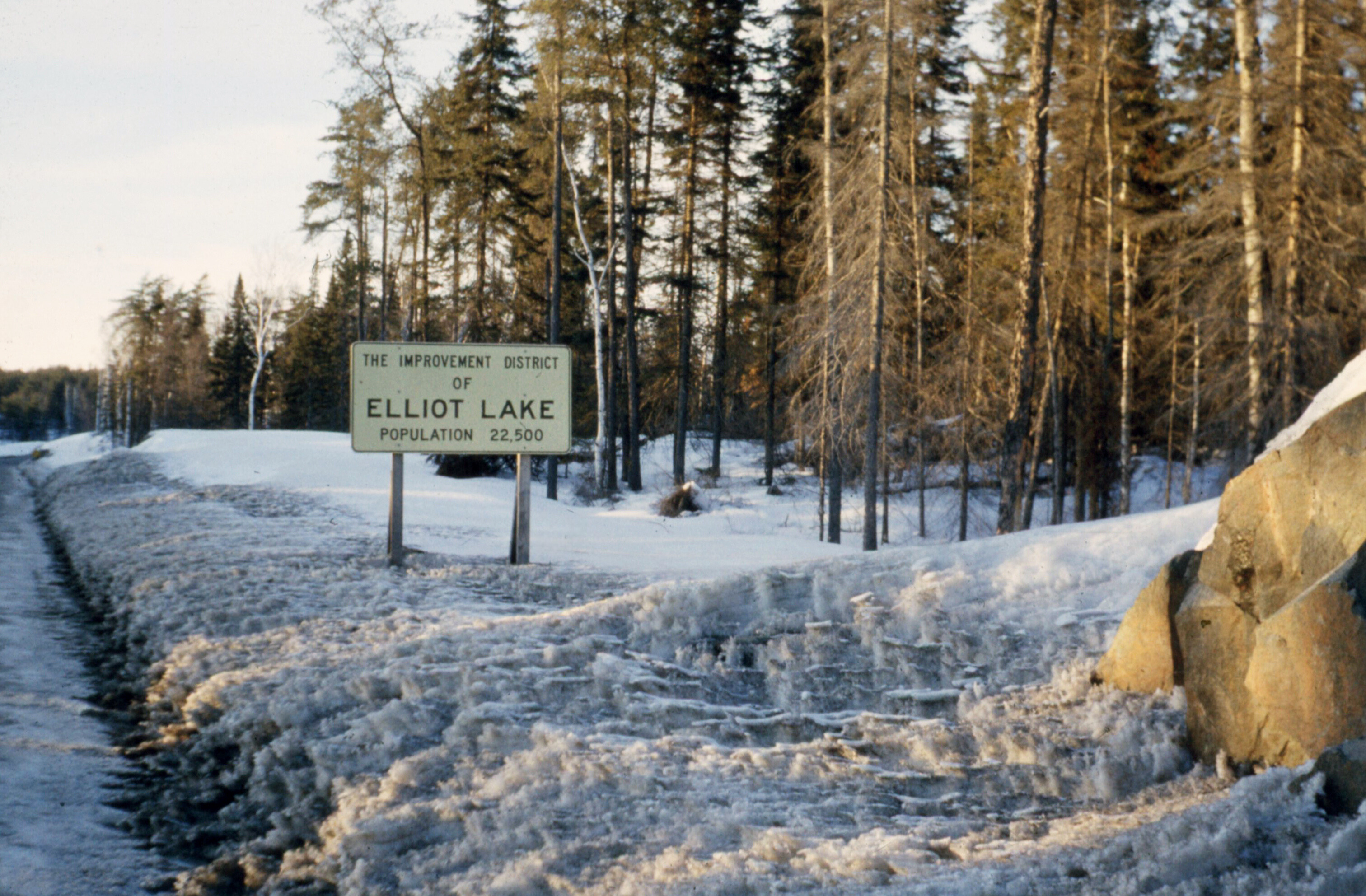
The City of Elliot Lake was a planned community, constructed through the collaboration of both private industry (Rio Algom Ltd. and Denison Consolidated Mines Ltd.) and public services (provincial and federal government). From 1955 to present, our municipality transitioned from wilderness, improvement district, to township, to town, to City.
With the establishment of the uranium mines in the area, a community was required to supply housing and other accommodations for the large workforce of miners and their families. The mining industry and the Canadian government moved swiftly to coordinate the area’s municipal development in the Spring of 1954. After thorough topographical surveys conducted by R.C. Hart (Algom manager), W.H. Hutchinson (engineer), and George Langford (University of Toronto professor), and with direction from Franc Joubin (discovery geologist), a plot of crown land, 1100 acres, was selected as the best possible site for a central community. A council of three trustees was set up to organize and administer the community. The first members of this board of trustees were Franc Joubin (chairman), E.B. Gillanders (vice-chairman), and W.E. Willoughby, with the support of municipal staff Percy Brown (Secretary-Treasurer). These men worked closely with numerous government departments but most especially with the Department of Planning and Development, for town planning and land use advisement, and the Department of Municipal Affairs, for counsel on municipal administration. The area became newly classified as the Improvement District of Elliot Lake which covered a total of 396 square miles to include both the town site and all of the mines.
Development began on three residential neighbourhoods, a commercial district, and two industrial areas to the eastern side of Elliot Lake. Each neighbourhood was built to be semi-independent, due the hilly terrain, consisting of 300-1500 single-family residences and complete with their own schools, churches, parks, shopping centres, and recreational facilities.
To pay off construction expenses and services rendered to the community, property lots were auctioned off to those moving to Elliot Lake. The average price of residential lots was $750 and commercial lots ranged from $750-$25,000. In 1956, the first residential property was completed in the Northern part of town, Neighbourhood 1, and construction continued steadily, replacing "tent cities" and panabodes with subdivisions of houses. Swiftly, within the span of five years, Elliot Lake was transformed from a rugged northern landscape to a capable, compact town site.
Elliot Lake continued to grow, reaching a population peak of 24,887 in 1960. With the failure to renew uranium contracts with the United Stated government past 1963, these numbers would soon steadily decline. By 1961, many Elliot Lake mines were consolidated or closed and the community was referred to in the media as a "ghost town," with lots of homes abandoned and boarded up. This population decline continued, reaching its all time low of 6664 residents in 1966.
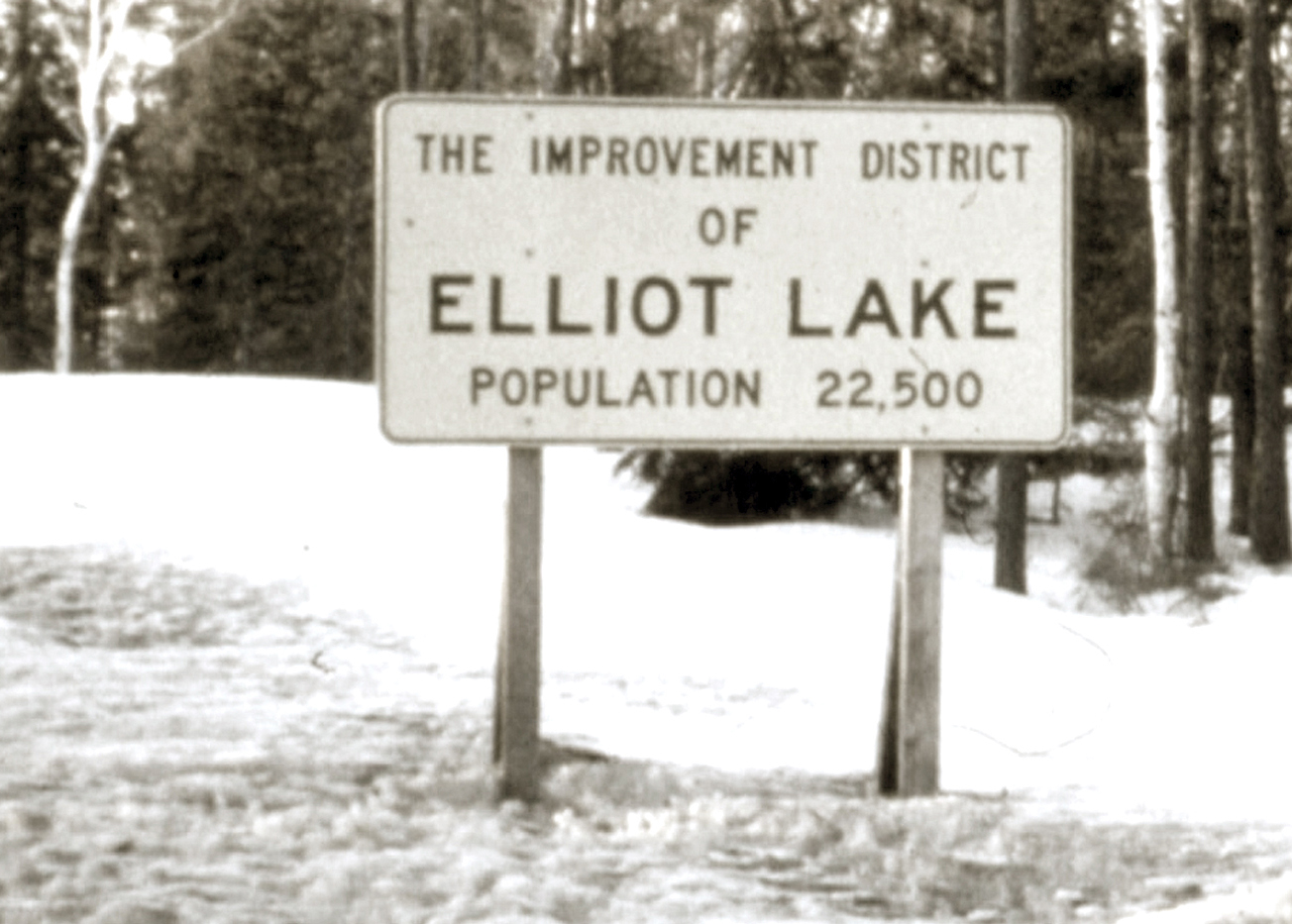
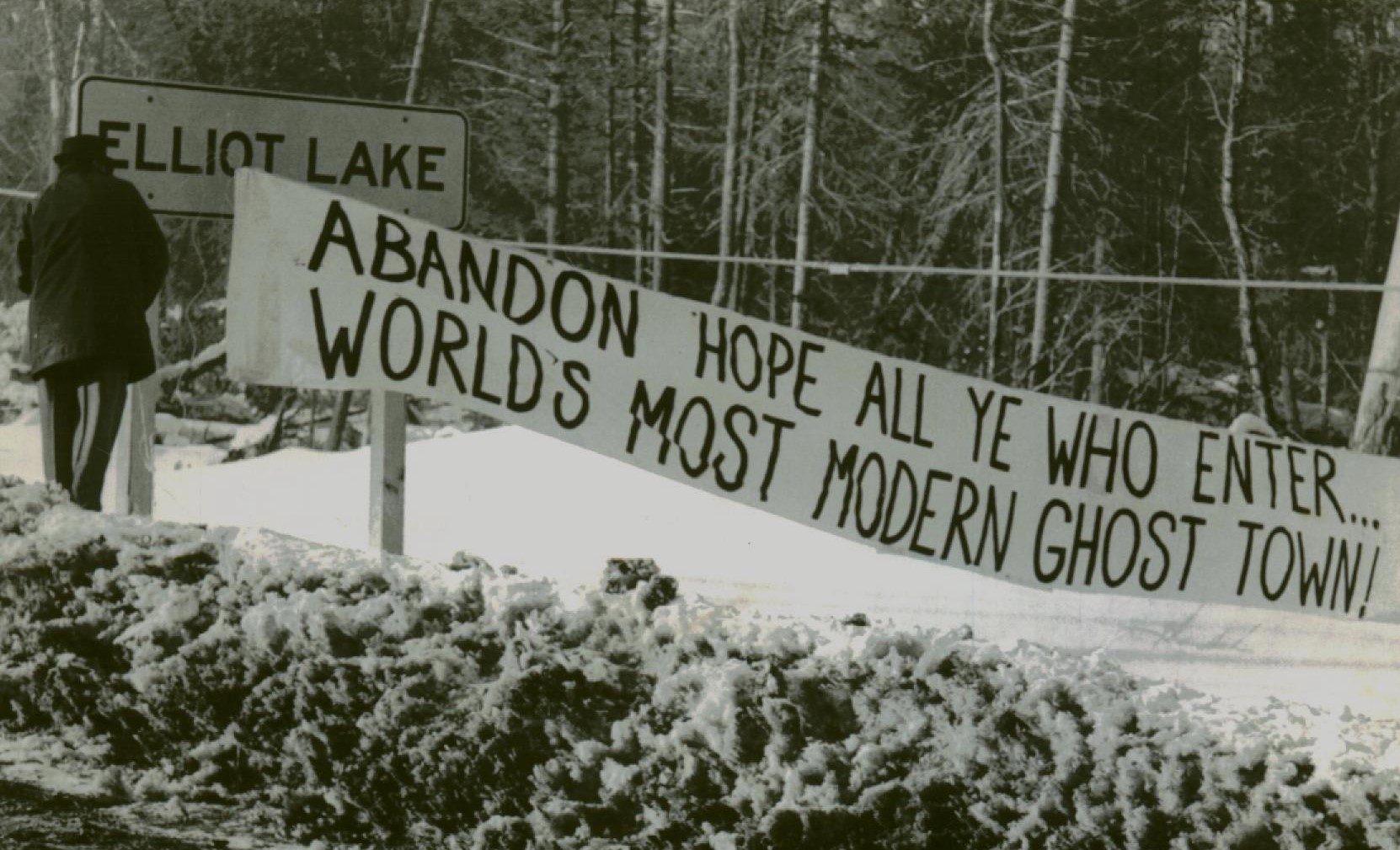
Despite these hardships, many citizens, and certain executives, did not give up the dream of Elliot Lake. Tourism became a vital factor in restoring Elliot Lake's ailing economy and many initiatives were born to promote visitors to our community like the Nuclear and Mining Museum, established in 1963, which quickly became a main attraction. On August 19, 1963, Lester B. Pearson became Prime Minister of Canada. As the Member of Parliament for the Algoma District, many were hopeful that Pearson would assist in keeping Elliot Lake alive. Upon visiting the town, Pearson is quoted with saying: "Elliot Lake deserves help because it refuses to accept defeat." With renewed efforts and support, Elliot Lake citizens decided they wanted a local government, in place of the government appointed board of trustees, and applied for township status. On April 1, 1966, the Improvement District officially became the Corporation of the Township of Elliot Lake; this was not a practical joke—it appeared Elliot Lake was here to stay.
By the mid-1970s it was clear that Elliot Lake would continue to grow and develop as the world market for uranium rose and new contracts were established. Mines were expanding and ramping up production, new housing was being built for the first time since the late 1950s, and new businesses were opening. As a result of this growth and stability, on January 1st, 1976, Elliot Lake's status would officially change from a township to a town.
Unfortunately, the need for Elliot Lake uranium would not last forever. By 1990, Rio Algom and Denison mines were beginning to shut down permanently. The end of uranium mining did not, however, mean the end of Elliot Lake. Adapting to survive, Elliot Lake looked to new opportunities for investment and growth, drawing from existing natural resources and government partnerships. Initiatives with the longest-lasting economic impact include Retirement Living, tourism, and small business diversification. The official closing of the final Elliot Lake uranium mine, Stanleigh, was June 30, 1996. While today most of the mine sites which put Elliot Lake on the map have been reclaimed by nature, decommissioning efforts continue. In the midst of the mine closures, on January 1, 1991, Elliot Lake had one final status change, officially transitioning from town to the Corporation of the City of Elliot Lake.